How to Plan a Silent Woodland Retreat Weekend in the UK
The best woodland weekends are rarely the most ambitious ones. They are the ones where nothing beeps, nobody talks over the birdsong, and you can hear a woodpecker working a dead oak two hundred metres away. Reaching that point takes a little planning — mostly around permission, weather and the small comforts that stop silence turning into misery. None of it is difficult. It simply needs doing before you leave the house.
Choose a wood that is quiet by design
Pretty woodland and quiet woodland are not always the same place. A beauty spot with a car park, a tea hut and a waymarked trail will still be busy at nine on a Saturday morning. If silence is the point, work backwards from noise.
Start with an Ordnance Survey 1:25,000 map. Look for A roads, railway lines, quarries and larger settlements within a kilometre or so of the wood's edge. Satellite imagery is good for spotting caravan parks, forestry tracks and campsites that maps miss. Prevailing wind matters more than most people expect: a wood sitting upwind of a main road will be noticeably quieter than one downwind of it.
Then think about who manages the land. The Woodland Trust, Forestry England, the National Trust, county wildlife trusts and some water companies all look after woods, and most publish their access rules online. A small campsite with woodland pitches and a strict no-music policy can be a better first step than wild camping, particularly if you are new to it. Patchy phone signal is a feature here, not a fault — but check before you promise anyone you will be contactable.
Get permission before you get attached to a spot
In England, Wales and Northern Ireland, camping on private land — including most woodland — requires the landowner's permission. There is no general right to wild camp. Scotland's access rights do allow lightweight, short-stay wild camping in many places, but local bylaws and permit areas apply in some popular spots, so check the rules for the exact location rather than the county as a whole.
Ask early, and ask specifically. A vague request gets a vague answer.
- May we camp overnight, on which dates, and with how many people?
- Are stoves acceptable, or is any flame off limits?
- Can we collect fallen deadwood, or should we bring everything in?
- Where should we park, and which gate should we use?
- Are dogs, hammocks or tarps a problem?
- Is there anything you would rather we avoided entirely?
Offer something in return — a small payment, or a litter sweep along the track on your way out. Get the answer in writing, by text or email, and carry the contact's name and number with you. On charity or public land, ask which team handles permits; it is often access and recreation rather than the general enquiries line. If money, insurance or liability is involved, read the terms carefully and take proper advice if anything is unclear.
Pack low-impact kit that still keeps you warm
The aim is to leave no trace beyond flattened grass. In practice that means no ground fire, no cutting of green wood, and everything you carry in coming home with you.
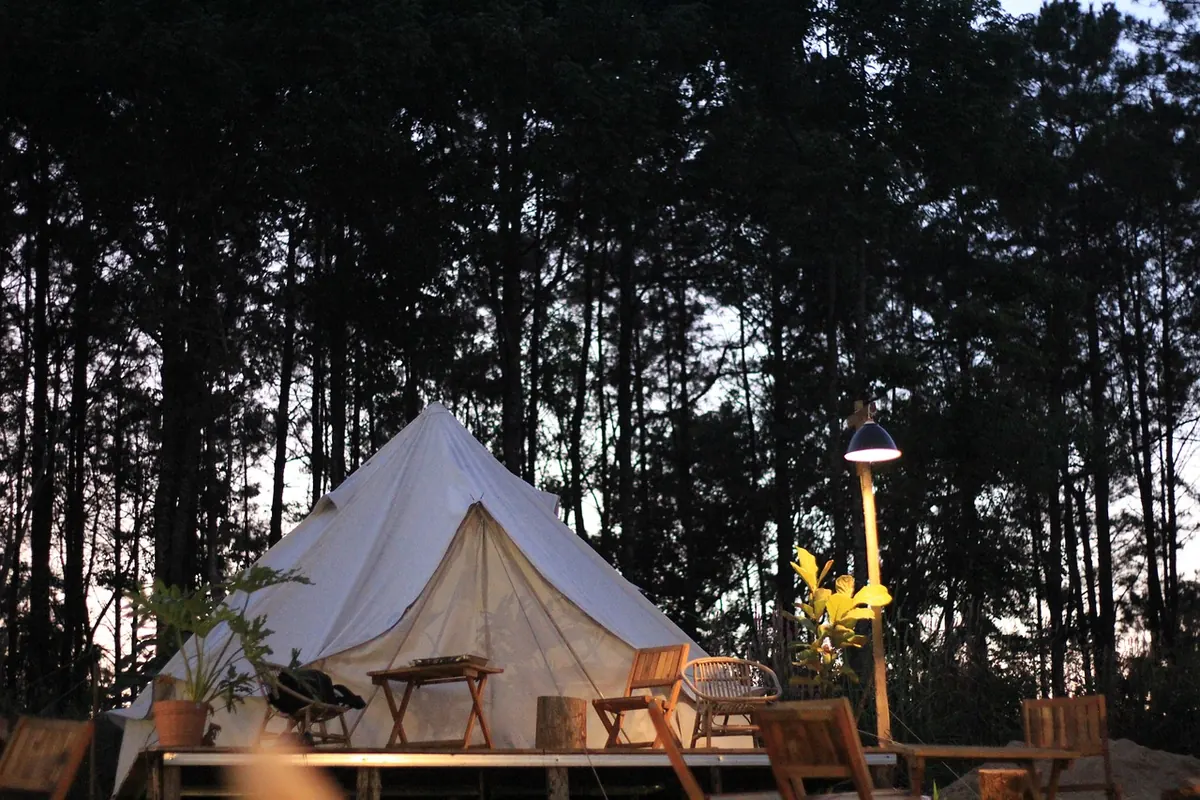
- Shelter: a tarp and groundsheet, or a small tent in a muted colour that blends into the trees.
- Sleeping: a closed-cell mat under a warm bag rated for a few degrees colder than the forecast, plus wool baselayers.
- Cooking: a small gas or alcohol stove, one pot, one long spoon. Fires are lovely and usually inappropriate — check before you plan around one.
- Light: a head torch with a red mode, so you do not flood the wood with white light at midnight.
- Water: carry it in, or take a filter and a sensible plan. Do not assume a stream is clean; boiling remains the reliable fallback.
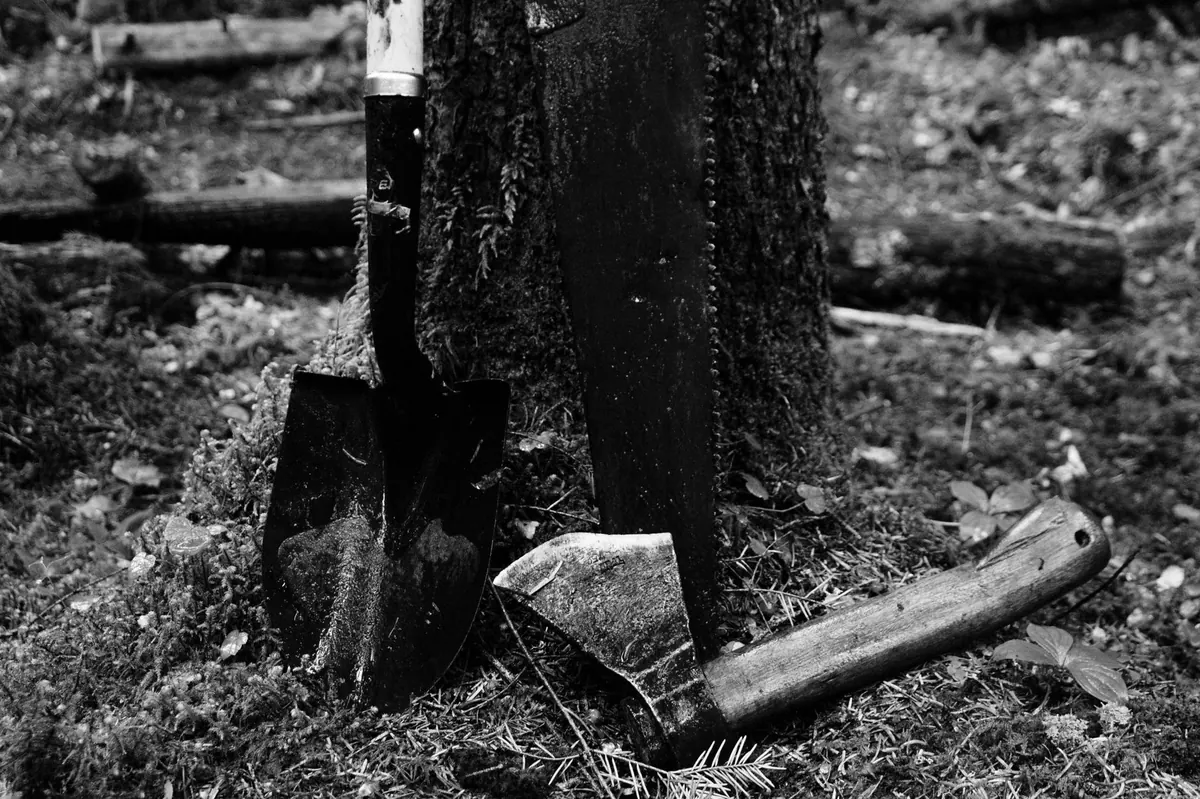
- Waste: a small trowel, a paper bag for used tissue and a bin bag for everything else. Bury human waste in a shallow hole well away from water, and carry the tissue out.
- Comforts: a sit mat, a notebook, a paperback, a flask.
Plan the digital detox before you lose signal
A detox works better when it is designed rather than merely endured. Tell two people where you are going: grid reference, car park, arrival and departure times. Download offline maps before you leave and carry a paper map and compass as well, because batteries fail in the cold.
Set an out-of-office and a voicemail greeting in advance. Then put the phone in aeroplane mode at the bottom of your pack, or leave it in the car altogether. Bring something for your hands — whittling, sketching, a bird list, a decent novel — because boredom is the gateway to noticing things.
If you have a medical condition, or you are heading somewhere genuinely remote, tell someone your plans and consider carrying a personal locator beacon. For anything medical, seek professional advice rather than relying on a blog post.
A gentle two-night itinerary
- Friday evening: arrive about ninety minutes before sunset, walk the boundary, and pitch away from large dead limbs. Eat something simple and let the light fall without switching on a torch.
- Saturday dawn: sit still for half an hour with a brew. This is the best wildlife hour of the weekend. Follow it with a slow walk, then lunch.
- Saturday afternoon: a two-hour block of doing nothing at all — no book, no phone, no talking.
- Saturday evening: one-pot supper, stars if the sky clears, early night.
- Sunday: pack, sweep the pitch for anything dropped, walk out slowly, and stop somewhere for a proper breakfast.
Weather, midges and the plan B
Rain is normal, not a crisis. A tarp pitched low and one genuinely dry spare layer will save the weekend. Midges are worst at dawn and dusk, near water and in still air; a head net, long sleeves and a sheltered pitch help a great deal. Wind and rain bring branches down, so avoid pitching beneath old beech, ash or poplar, and never under a lone mature tree. If the forecast turns properly severe, have a lowland campsite or a bunkhouse in mind as an escape route.
The last hour before you go
Confirm permission is still in place and the contact number is written down. Check the forecast for wind, not just rain. Leave your itinerary with someone, along with a time they should start worrying. Pack out what you packed in, plus one extra piece of litter, and switch the phone to aeroplane mode before the engine starts.
Do that, and the quiet takes care of itself.
Photo: 12019 / Pixabay